
Family Benefits for Veterans with 100% P&T or TDIU Including CHAMPVA
A 100% VA disability rating can change more than a veteran’s monthly compensation. When the rating is permanent and total, it can also open the door to health care, education help, state tax relief, and other benefits for family members.
The key detail is permanence. A veteran can be rated 100% schedular, or receive 100% compensation through Total Disability Based on Individual Unemployability, often called TDIU. But many family benefits require the VA to consider the disability permanent and total, often shown as 100% P&T or wording that says no future exams are scheduled.
This guide explains the major ancillary benefits a spouse, children, and in some cases surviving family members may receive when a veteran is 100% service connected disabled permanent and total or has TDIU that is also considered permanent.
This article is informational only. VA rules can change, and state benefits vary widely, so always confirm eligibility with VA, your state veterans agency, or an accredited representative.

The VA status that matters for family benefits
Not every 100% rating works the same way for dependents.
A veteran may be paid at the 100% rate in several ways:
100% schedular rating
The VA rates one or more service-connected conditions high enough to equal 100% under the rating schedule.
TDIU
The VA pays at the 100% rate because service-connected conditions prevent substantially gainful employment, even if the combined rating is below 100%.
Permanent and total status
The VA considers the disability total and not expected to improve. This is the status that often triggers major family benefits.
A veteran with TDIU may qualify for many of the same family benefits as a 100% schedular veteran if the VA also finds the condition permanent. The rating decision may use phrases such as:
“Permanent and total disability”
“No future examinations are scheduled”
“Basic eligibility to Dependents’ Educational Assistance is established”
That last phrase is especially important. If the VA grants eligibility for Dependents’ Educational Assistance, it usually means the VA recognizes the veteran as permanently and totally disabled for benefit purposes.
Family members should keep a copy of the rating decision and any VA letters that confirm P&T status. Many programs require proof.
CHAMPVA can provide health coverage for spouses and children
CHAMPVA is one of the most valuable family benefits tied to a veteran’s permanent and total disability status.
CHAMPVA stands for the Civilian Health and Medical Program of the Department of Veterans Affairs. It helps cover certain medical care for eligible spouses, surviving spouses, and children of qualifying veterans.
A family member may qualify for CHAMPVA if they are the spouse or child of a veteran who:
Is rated permanently and totally disabled due to a service-connected condition
Died from a service-connected disability
Was rated permanently and totally disabled due to service-connected disability at the time of death
There are other qualifying situations, including certain deaths on active duty, but families in that category are often connected to TRICARE instead.
The biggest exclusion is TRICARE eligibility. If a family member is eligible for TRICARE, they generally cannot use CHAMPVA.
CHAMPVA is not the same as VA health care for veterans. Family members usually see civilian providers, and CHAMPVA helps pay covered costs. It can work as a primary payer in some cases or as secondary coverage when the person has other insurance.
For families who have been buying private health coverage, CHAMPVA can make a major difference. It may help with:
Doctor visits
Hospital care
Mental health care
Prescription drugs
Durable medical equipment
Some preventive services
There are rules, cost shares, deductibles, and limits. Families should review current VA CHAMPVA materials before making insurance changes.
A spouse who becomes eligible for Medicare usually must enroll in Medicare Parts A and B to keep CHAMPVA. Children may remain eligible until certain age limits, with extensions in some student or incapacity situations.

Education benefits can help a spouse or child build a future
Another major benefit is Dependents’ Educational Assistance, often called DEA or Chapter 35.
DEA can provide education and training benefits to eligible spouses and children of veterans who are permanently and totally disabled because of service-connected conditions. It may also apply when a veteran died because of a service-connected condition or while rated P&T.
This benefit can help pay for approved programs such as:
College degrees
Career and technical programs
Apprenticeships
On-the-job training
Some licensing and certification programs
The VA pays the eligible dependent directly, based on the type of training and enrollment level. The amount can change over time, so families should check the current VA payment rates before planning a school budget.
For children, DEA eligibility usually applies during a specific age window. For spouses, the eligibility period depends on the date of the VA decision and other circumstances. Surviving spouses may have different time limits.
DEA can be powerful, but families should plan carefully. Some education benefits cannot be used at the same time, or one choice may affect another benefit. For example, a child receiving DEA may affect whether the veteran can also receive additional VA compensation for that child as a dependent. The exact impact depends on the situation.
A practical first step is to compare three things before enrolling:
Benefit question | Why it matters |
Is the school or program VA approved? | DEA can only be used for approved education or training. |
Will the student attend full time or part time? | Payment amounts are tied to training time. |
Will using DEA affect dependent pay? | A veteran’s compensation may change when a child elects Chapter 35. |
Spouses should also check state education benefits. Many states offer tuition waivers, scholarships, or reduced tuition for dependents of veterans who are 100% disabled, P&T, or died from service-connected causes. These programs are state specific, and the rules can be very different from VA rules.
Monthly compensation can increase when dependents are added
A veteran rated at least 30% disabled may receive extra monthly VA compensation for eligible dependents. This includes veterans paid at the 100% rate, whether schedular or through TDIU.
Eligible dependents can include:
A spouse
Children under VA age limits
Certain school-age children
Certain disabled adult children
Dependent parents in some cases
This is not a separate payment to the family member in most cases. It is an additional amount added to the veteran’s monthly compensation.
The VA does not always add dependents automatically. A veteran may need to file a claim to add a spouse, child, or parent. If a veteran gets married, has a child, adopts a child, divorces, or a child leaves school, the VA should be updated.
Delays can matter. If VA pays for a dependent who is no longer eligible, it may create an overpayment. If VA does not know about an eligible dependent, the veteran may miss money they are entitled to receive.
The same idea applies to life changes after a veteran receives 100% P&T or TDIU. Check the dependency record and make sure the VA has current information.

State and local benefits can be just as important
Federal VA benefits get most of the attention, but state and local benefits can save families thousands of dollars over time.
Many states offer special benefits for veterans rated 100% disabled, permanently and totally disabled, or unemployable due to service-connected conditions. Some benefits extend to spouses and dependents.
Common state or local benefits include:
Property tax exemptions or reductions
Some states reduce or eliminate property taxes for qualifying disabled veterans. In certain cases, a surviving spouse can keep the benefit after the veteran dies.
Free or reduced vehicle registration
Some states offer disabled veteran plates or reduced registration fees.
State park passes
Families may qualify for free or discounted access to parks, camping, hunting, or fishing licenses.
Dependent tuition help
Some states offer tuition waivers or scholarships for spouses and children of qualifying disabled veterans.
Surviving spouse benefits
Some state benefits continue after the veteran’s death, but the spouse may need to apply again or prove continued eligibility.
These benefits are not uniform. A veteran rated 100% P&T in Texas may see different state benefits than a veteran with the same rating in Florida, California, Ohio, or New York.
The best source is usually the state department of veterans affairs, county veterans service office, or local tax assessor for property tax programs. Families should ask specifically about benefits for:
100% service-connected disability
Permanent and total disability
TDIU paid at the 100% rate
Surviving spouses
Dependent children
The wording matters because some state programs accept TDIU, while others require a schedular 100% rating. Some require P&T status. Some require wartime service, residency, home ownership, or a certain type of discharge.
Survivors may qualify for ongoing support
When a veteran is 100% P&T or TDIU permanent, families should also understand survivor benefits. These are not pleasant to think about, but planning ahead can prevent stress later.
One key benefit is Dependency and Indemnity Compensation, known as DIC. DIC is a monthly benefit for eligible survivors of certain veterans. A surviving spouse, child, or parent may qualify if the veteran died from a service-connected condition. There are also rules that may apply when a veteran was rated totally disabled for a certain period before death.
DIC is different from the veteran’s disability compensation. The veteran’s compensation ends when the veteran dies. Survivors must apply separately for DIC.
Other possible survivor-related benefits include:
CHAMPVA continuation for eligible survivors
DEA education benefits
Burial and memorial benefits
VA-backed home loan benefits for certain surviving spouses
State survivor benefits
A surviving spouse should not assume they are automatically enrolled in every benefit. Most programs require an application and supporting documents, such as the veteran’s DD214, marriage certificate, death certificate, and VA rating decisions.
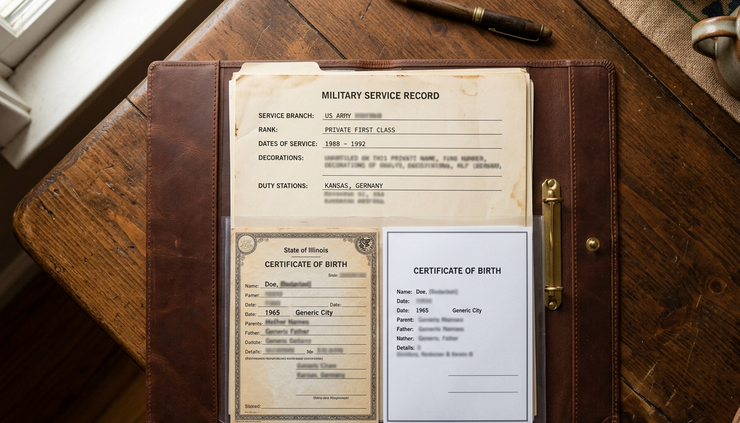
Families can make this easier by keeping a simple file with:
DD214 or other discharge papers
Most recent VA rating decision
Marriage certificate
Birth certificates or adoption records
Social Security numbers for family members
CHAMPVA, DEA, and dependency records
Contact information for an accredited representative
How families can start without getting overwhelmed
The number of programs can feel confusing, especially when each one has its own application. A simple order of operations helps.
Start with the veteran’s VA rating decision. Confirm whether the VA has granted permanent and total status. Look for DEA language, future exam language, and the effective date.
Next, make sure the VA dependency record is correct. Add eligible dependents if they are missing. Remove anyone who is no longer eligible.
Then look at the major family benefits in this order:
CHAMPVA
Check whether the spouse or children are eligible, especially if they do not have TRICARE.
DEA Chapter 35
Review education options for a spouse or child before choosing a school or training program.
State benefits
Contact the state veterans agency and local tax office. Ask about property tax, tuition, vehicle, and recreation benefits.
Survivor planning
Keep key records together and learn the basics of DIC, burial benefits, and survivor CHAMPVA rules.
Accredited help
A Veterans Service Organization, county veterans service officer, accredited claims agent, or accredited attorney can help review eligibility and applications.
Families should also be careful with paid services that promise guaranteed outcomes. No one can guarantee a VA decision. Most benefit applications can be filed directly with VA or through accredited help.
The main takeaway is simple: a 100% P&T rating, or TDIU that VA recognizes as permanent, can support more than the veteran. It can help protect a spouse’s health care, reduce education costs for children, increase monthly compensation, and create survivor protections if the family plans ahead.
Do not stop at the compensation letter. Read the rating decision, gather the documents, and check each federal, state, and local benefit one by one. That is how families turn a VA rating into real support at home.

Comments